Matcha vs Sencha: A Beginner's Guide to Green Tea Types and Brewing
Matcha and sencha grow on the same plant, Camellia sinensis, and both end up as green tea in your cup. Between those two points they take different roads, and the difference is not subtle. One arrives as a powder you whisk into water and drink whole; the other as rolled leaves you steep and then lift out. That fork in the road explains the flavor, the equipment, the timing, and how forgiving each tea is on a rushed morning.
Processing: where the two teas part ways
Sencha is Japan's everyday green tea, and most of it follows the same rhythm. Leaves are harvested and steamed within hours to stop oxidation — the step that keeps them green instead of letting them move toward oolong or black tea. They're then rolled and dried into thin needles. Nothing is ground, and what you drink is an infusion of the leaf.
Matcha takes a longer detour. The plants are shaded for the final weeks before harvest, which builds up chlorophyll and the amino acids behind savory sweetness. The leaves are steamed, dried, and stripped of stems and veins to make tencha, which is finally ground — traditionally between granite stones — into powder. Because the powder stays suspended in the water, you drink the entire leaf.
That distinction matters more than it sounds. With sencha, water extracts flavor from the leaf and leaves the fiber behind. With matcha, there is no fiber to leave behind. Every bit of the leaf — its color, its caffeine, its umami — ends up in the bowl. This is why a small amount of matcha can feel so potent, and why sencha rewards patience and re-steeping.
Flavor: bright and grassy versus creamy and deep
Sencha tastes like the color green: cut grass, steamed spinach, a little citrus peel, sometimes a clean marine note, often with a sweet finish a second after you swallow. Oversteeped sencha, or sencha made with water that's too hot, turns bitter and drying.
You'll see two styles at the tea shop. Asamushi is lightly steamed, with intact needles and a clear, brisk cup. Fukamushi is steamed longer, so the leaves break into pieces, the liquor turns cloudy, and the taste leans sweeter and softer — it also brews faster. If you like a gentle cup, fukamushi is a friendly place to start.
Matcha is denser and more savory: umami, a creamy body, vegetal sweetness. Labels like ceremonial and culinary aren't regulated, but they're useful shorthand. Drinking-grade matcha is smooth enough to whisk with water alone; culinary matcha is sharper and cheaper, meant for lattes and baking where milk and sugar cover the edge. A good ceremonial matcha should taste sweet and round, not chalky, and it should leave a lingering green note rather than a bitter scratch at the back of your throat.
What you actually need in the kitchen
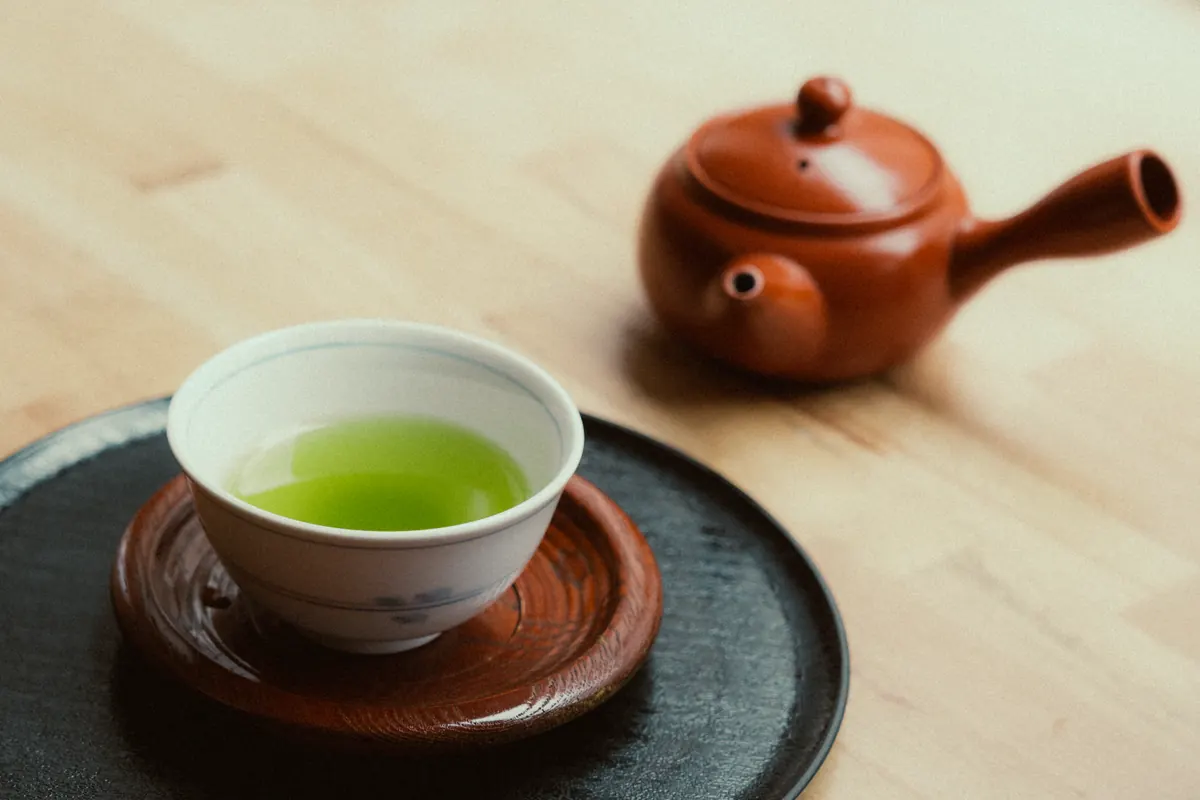
- For sencha: a small pot. A Japanese kyusu with a side handle and a mesh basket is ideal, but any 300–500 ml teapot works well.
- For matcha: a wide bowl, a bamboo whisk (chasen), and a scoop (chashaku). A fine strainer is the unsung hero here.
- For both: a way to cool water. Pouring boiling water into a cup and letting it sit a minute or two lands you near the 70–80°C these teas prefer.
- Worth buying: a small kitchen scale. Scoops vary wildly; grams don't.
You can spend a lot on Japanese tea gear, but you don't have to. A glass measuring cup, a fine-mesh strainer, and a regular whisk will get you surprisingly far. Upgrade when you know which tea you actually drink every week. The best equipment is the equipment you'll use before breakfast, not the set that looks beautiful and stays in the cupboard.
Brewing matcha, step by step
- Sift 1–2 grams (about ½–1 teaspoon) through a fine strainer into your bowl. Skipping this is why dry clumps float on top.
- Heat water to roughly 70–80°C (160–175°F). Boiling water makes matcha harsh and flat.
- Add about 60–70 ml of water for thin, foamy usucha. For thick koicha, use more powder and less water, and knead rather than whisk.
- Whisk briskly in a W or zigzag motion from the wrist, not the shoulder, for 15–20 seconds, until a fine foam covers the surface.
- Drink it soon. Matcha settles and dulls within minutes.
If your matcha tastes bitter even at the right temperature, try using less powder or more water. If it tastes watery and flat, use a little more powder or whisk a few seconds longer. Small adjustments matter because matcha has nowhere to hide.
Brewing sencha, step by step
- Boil the water, then cool it. Pour it into your cups first — this warms them and drops the temperature. Around 70–80°C suits most sencha; hotter water pulls out bitterness.
- Use roughly 4–5 grams of leaf per 200 ml of water, about a teaspoon per cup.
- Pour the cooled water over the leaves and steep for 60–90 seconds. Fukamushi needs less, closer to 45–60 seconds.
- Pour every last drop, moving between cups so each is equally strong. Water left on the leaves keeps steeping them and muddies the next round.
- Re-steep two or three times. The second infusion is often the sweetest; use slightly hotter water and a shorter time, then lengthen the third.
Notice how different the two methods feel. Matcha is a quick, focused ritual: sift, whisk, drink. Sencha is a slower conversation with the leaf: pour, wait, pour again, and taste how the tea changes from cup to cup. Neither is better. They simply fit different moods and different mornings.
Three habits worth fixing early
Boiling water on everything. Most green tea bitterness made at home comes from temperature rather than from the leaf itself. Cool the water first, then add the leaf, and taste before you decide you don't like green tea. If your tea still bites, drop the temperature another 10°C before you blame the tea.
Steeping by the clock instead of tasting. Timers are a starting point, not a law. At 60 seconds, taste the sencha. If it's already sweet and full, stop. If it's thin, give it another 15 seconds. Your tongue is a better gauge than any recipe, because leaf size, age, and water chemistry all change the equation.
Ignoring the leaf-to-water ratio. A heaped tablespoon of sencha in a tiny cup will taste bitter no matter how carefully you cool the water. Weigh your tea once or twice so you can see what 4 grams actually looks like, then trust your eye after that. Consistency is what turns a lucky good cup into a repeatable one.
Caffeine, L-theanine, and when to drink each
Both teas contain caffeine, but matcha usually delivers more per serving because you consume the whole leaf. Sencha's caffeine arrives with a gentler release, partly because you're drinking an infusion rather than a suspension of ground leaf. If you're sensitive to caffeine, matcha in the late afternoon can keep you up; sencha is often easier to handle earlier in the evening, though it still isn't a bedtime drink.
Matcha also contains high levels of L-theanine, an amino acid that promotes a calm, alert feeling. That combination — caffeine plus L-theanine — is why a bowl of matcha can feel focused rather than jittery. Sencha contains L-theanine too, especially in shaded or high-grade leaves, but the effect is milder. Many drinkers keep matcha for mornings when they need steady attention and sencha for afternoons when they want a lift without the edge.
Choosing and storing green tea
Choosing your first matcha or sencha
If you're new to green tea, don't start with the most expensive tin on the shelf. Start with a middle-grade sencha and a small pouch of drinking-grade matcha. That lets you learn the brewing variables without worrying about wasting rare tea. Look for harvest dates, not just expiration dates; green tea is freshest within a year of harvest, and matcha is even more perishable.
- For sencha: choose a reputable Japanese brand and note whether it's asamushi or fukamushi. If you drink tea with meals, fukamushi's softness pairs especially well with rice, fish, and lightly salted food.
- For matcha: buy the smallest size you'll finish in a month or two. Ceremonial grade is for whisking with water; culinary grade is for smoothies, lattes, and desserts.
- For both: avoid tea that looks dull, smells dusty, or has been sitting open on a shelf. Fresh green tea should smell sweet and green, not like hay.
Storing green tea so it stays fresh
Green tea is perishable. Heat, light, air, and moisture all push it toward stale, flat, and bitter. Matcha is the most fragile because its surface area is enormous; sencha is more forgiving but still fades within months if left in a clear jar near the stove.
- Keep tea in an airtight container, ideally opaque or stored in a dark cupboard.
- Keep it away from spices, coffee, and anything strongly scented. Tea absorbs odors quickly.
- For matcha, press out as much air as possible and consider refrigerating unopened tins. Let them come to room temperature before opening to avoid condensation.
- Buy small amounts often rather than a year's supply at once. Freshness beats quantity every time.
Photo: Anh Nguyen / Pexels