
The Beginner's Guide to Gongfu Tea Set: Essential Pieces and First Brew
A gongfu set on a shop shelf can look like a puzzle with too many pieces: a dozen small vessels, none of which appear to be the actual teapot. The reality is friendlier. Gongfu brewing just means using more leaf, less water and much shorter steeps, then pouring again and again until the tea fades. The tools exist to make that rhythm easy — to move hot water quickly, even out the strength of every cup, and keep your table dry while you work. You can start with four pieces and add the rest later, or never.
What Gongfu Brewing Actually Asks of You
Because the leaf-to-water ratio is high, the tea gives up its flavour fast. Your brewing vessel needs to pour quickly and cleanly, and it needs to be small — usually somewhere between 100 and 150 ml, enough for one round of tiny cups. Everything else in the set is support staff.
Two habits matter more than any object you buy. First, preheat your vessels with hot water before the leaf goes in, so the tea isn't hitting cold porcelain. Second, pour out completely between infusions. A tablespoon of water left sitting on the leaves keeps them steeping, and the next round will taste bitter and thin.
The Essential Pieces
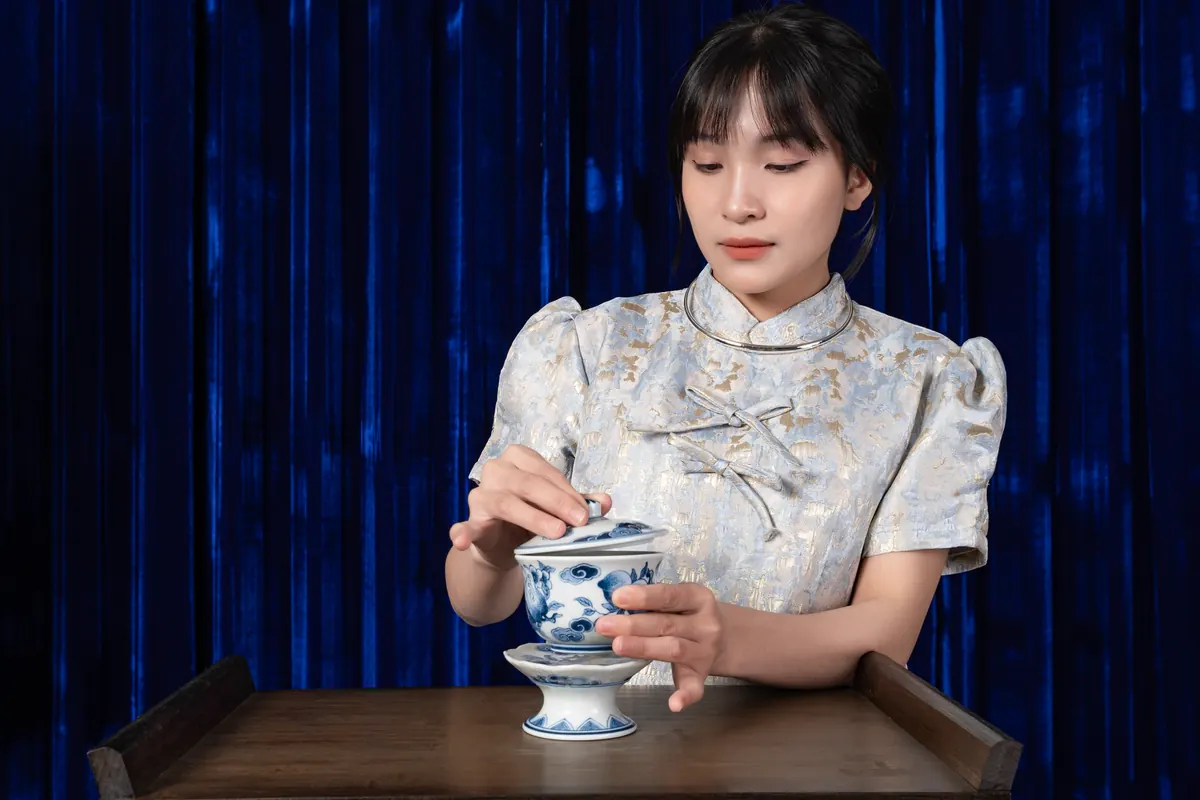
- Gaiwan or small teapot. The gaiwan — a lidded bowl with a saucer — is the usual beginner's choice. It's inexpensive, works for every kind of tea, and you can watch the leaves open. A small teapot does the same job with a handle, but be sure it pours without dribbling.
- Fairness pitcher (gongdao bei). You pour each infusion into this first, then serve from it. It blends the tea so the first cup isn't weak and the last one harsh. It also lets the tea cool a few degrees before it reaches your mouth.
- Strainer. Catches broken leaf and fine dust so the pitcher stays clear. Sit it on the pitcher when you pour.
- Cups. Small ones, 30–60 ml. Porcelain or glass is fine and cheap; thin rims feel better than thick ones.
- Tea tray with drainage. This is the piece people underestimate. It catches the overflow and rinse water so you're not mopping between pours. A simple tray with a slotted top and a reservoir underneath is plenty.
- Kettle you can control. Variable temperature is helpful, but a kettle plus a little waiting time works too. A gooseneck spout gives you more accuracy when pouring into a gaiwan.
Two optional extras earn their place early: a small kitchen scale, because gongfu lives on ratios, and a timer — your phone is fine — because infusions are counted in seconds.
What You Can Wait On
Tea pets, tongs, picks, scoops, caddies and carved wooden trays are pleasant, and none of them will improve your first cup. Nor do you need a clay pot yet. Unglazed clay absorbs flavour over time, which is wonderful when it's dedicated to one tea and confusing when it isn't. Learn on porcelain or glass first. It's neutral, forgiving and cheap to replace.
Your First Session, Step by Step
- Warm everything. Fill the gaiwan, pitcher and cups with hot water, then empty them into the tray. The vessels should feel hot when you add the leaf.
- Measure the leaf. As a starting point, about 5 grams of tea per 100–120 ml of water — roughly one heaped teaspoon for a rolled oolong, more for loose twisted leaf because it takes up space without weighing much.
- Heat the water. Green and white teas around 75–85°C, oolongs and blacks near boiling, puerh and most aged teas at a full boil.
- Rinse, if appropriate. Oolong, puerh and heavily roasted teas benefit from a quick rinse: pour water over the leaf and immediately out. Discard it. Fresh green tea usually skips this.
- Brew the first infusion. Pour water in a slow circle, put the lid on, and start counting. Ten to twenty seconds is a sensible first attempt.
- Pour it all into the pitcher. Tip the gaiwan or pot steeply and keep going until the last drop falls. Don't let it sit.
- Serve and taste. Pour from the pitcher into the cups in one pass, filling each a little at a time so they end up even.
- Repeat. Add roughly five to ten seconds per infusion. Good tea gives five to eight rounds; some gives a dozen.
Amounts, Temperatures and Timing
Treat the numbers above as a starting line, not a rule. If the first cup is bitter, use less leaf or shorten the steep. If it's watery, add leaf or a few seconds. Water temperature moves faster than anything else — a green tea at a full boil can turn harsh in one pour.
Taste each infusion before you commit to the next timing. After a few sessions you'll notice the leaves opening, the aroma shifting from floral to something deeper, and the liquor thickening or thinning. That noticing is the whole point of brewing this way.
Cleaning and Storing Your Set
Rinse everything with hot water after use and let it air dry upside down on a rack or towel. That's it for porcelain and glass. Skip soap and skip the dishwasher. Unglazed clay should never see detergent — it soaks in and reappears in the next pot of tea. If a strainer gets clogged, an old toothbrush and warm water handle it.
Store your tea away from light, heat and strong smells, in a sealed tin or bag. Kept on an open shelf next to spices, even good tea tastes like the cupboard within a few weeks. Keep one clay pot for one type of tea if you go that route; a pot used for both puerh and green tea will give you neither clearly.
Build the Habit, Not the Collection
You don't need a full set to brew gongfu style. A gaiwan, a pitcher, one cup and a bowl to catch the spills will carry you a long way, and you can add pieces as you notice the gaps yourself. Brew the same tea three times in a week and pay attention to what changes. Adjust one thing at a time — leaf, then temperature, then timing — and keep notes if you like.
The set is only a set of conveniences. The skill is in the pouring, and the pouring gets better with practice, spilled water and all.
Photo: Gốm sứ Cương Duyên / Pexels